Headline: Mold Base Material Selection: P20, 718H, or H13 – Are You Choosing Right?

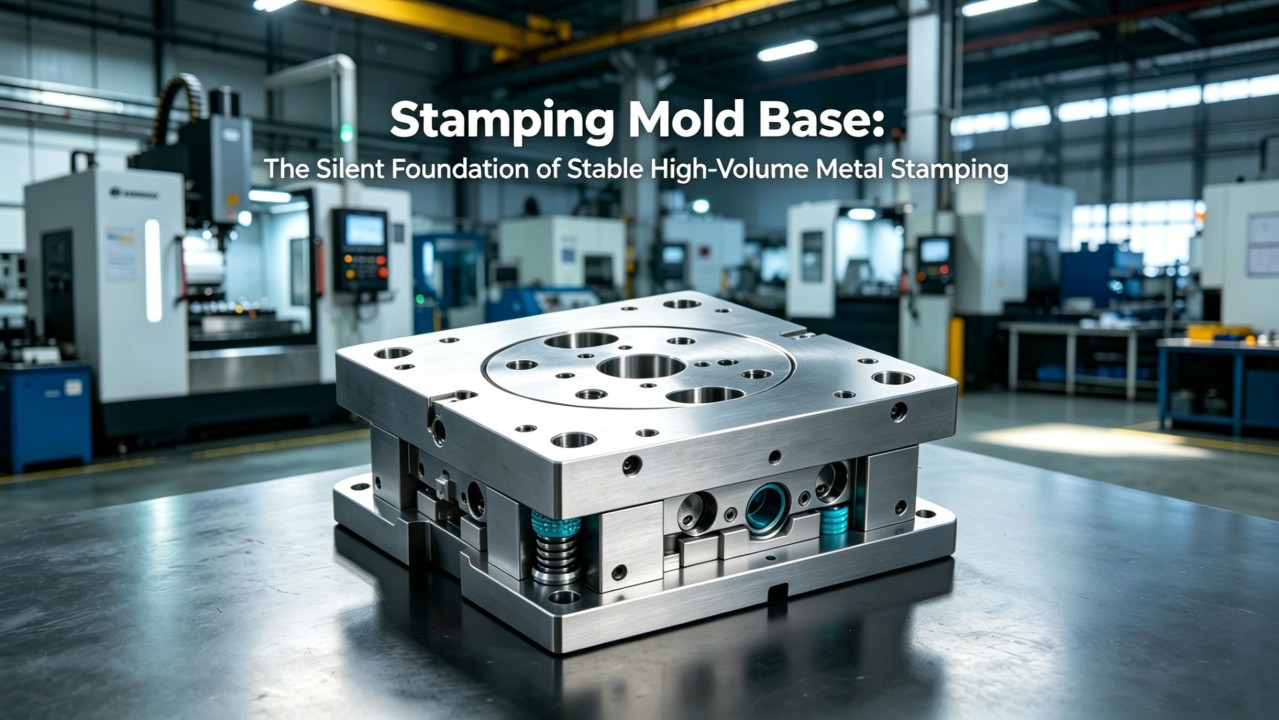
In the mold manufacturing industry, the mold base (or mould frame) serves as the skeleton of the entire tool. While it may not directly shape the final product, it directly dictates the mold's stability, lifespan, and lead time.
A common mistake many engineers make during material selection is focusing only on price, not on working conditions, or relying solely on past experience without analyzing the data.
Today, let's dive deep into three of the most commonly used steels for mold bases—P20, 718H, and H13—and discuss how to make the optimal choice for different applications.
1. P20: The "King of Cost-Effectiveness" for General Use
Core Characteristics: Supplied in a pre-hardened state (typically HRC 28-32). Requires no subsequent heat treatment and offers excellent machinability.
Ideal Applications:
High-Volume Standard Mold Bases: For large runs of low-to-medium requirement plastic molds (e.g., household appliance casings, daily necessities), P20 is the dominant choice.
Cost-Sensitive Projects: If your mold's required lifespan is under 500,000 cycles and the plastic isn't highly corrosive, P20 helps keep initial costs to a minimum.
Pain Points: Limited polishability and wear resistance. Not suitable for mirror-finish applications or highly corrosive plastics (like PVC).
2. 718H: The "Quality Champion" for Demanding Plastic Molds
Core Characteristics: Think of this as the "upgraded" version of P20. It's also supplied pre-hardened (with higher and more uniform hardness than P20, typically HRC 32-36), but boasts higher purity and is produced via special melting processes.
Ideal Applications:
Large Home Appliances & Automotive Interiors: Think TV bezels, car dashboards. These require excellent surface finishes, and 718H offers superior polishability (up to a mirror finish).
High-Lifespan Requirements: Compared to P20, 718H offers better fatigue strength, making it suitable for long-life projects ranging from 500,000 to 1 million cycles.
Mildly Corrosive Plastics: Offers slightly better corrosion resistance than P20.
Advantage: It solves P20's common issues like "inconsistent hardness" and "orange peel effect during polishing," making it the workhorse for professional mold shops.
3. H13: The "Tough Guy" for Die Casting & High-Stress Conditions
Core Characteristics: This is a chromium-molybdenum hot-work tool steel. The key difference from the previous two is: H13 is typically supplied in an annealed (soft) state and requires post-machining heat treatment (quenching & tempering) to achieve its final hardness (HRC 46-52).
Ideal Applications:
Die Casting Molds (Aluminum, Zinc, Magnesium Alloys): This is H13's traditional territory. It must withstand repeated thermal shock from molten metal, requiring excellent high-temperature strength and thermal fatigue resistance.
High-Wear Engineering Plastic Molds: Certain engineering plastics (e.g., PA, PC with high glass fiber content) are highly abrasive and have poor flow. Standard pre-hardened steels are insufficient. An H13 mold base, properly heat-treated, provides the necessary rigidity and wear resistance.
Key Consideration: Choosing H13 means a longer lead time (heat treatment, stress relieving after EDM/wire cutting). The cost isn't just in the material, but in the process control required.
Selection Guide: 3 Questions to Ask Yourself
When you're looking at material options, ask yourself these three questions:
Ask about the Working Conditions:
Injection temperature below 200°C, non-corrosive? Choose P20.
Moderate injection temperature, good surface quality required? Choose 718H.
Aluminum die casting, or injection of highly abrasive, glass-filled engineering plastics? Choose H13 (heat-treated).
Ask about the Required Lifespan:
Short-run mold (< 300k cycles): P20
Medium to long-run mold (300k - 1M cycles): 718H
Long-run or hot-work mold (> 1M cycles or high temps): H13
Ask about the Lead Time:
Urgent project, no time for heat treatment? P20 or 718H.
Time available for precise heat treatment to maximize performance? H13.
Summary
There is no single "best" material, only the most appropriate one for your specific needs.
P20 is the "subsistence" level choice, solving the problem of "getting the job done."
718H is the "prosperity" level choice, solving the problem of "doing the job well."
H13 is the "specialist" level choice, solving the problem of "doing the difficult job at all."
Spending an extra minute thinking about your mold base material selection could save an hour of machining time later, or even extend your mold's life by months.
Which of these three materials do you use most often in your projects? Have you ever faced issues due to incorrect material selection? Feel free to share your experiences in the comments!
Precision Preform Mold Bases: The Engineering Foundation of High-Performance PET Packaging
From "Skeleton" to "Mapping": The Profound Impact of Product Design on Mold Bases
Related Article