9 Things to Know About Plastic Injection Molding
Everywhere you look, most plastic objects in the world around you are created using injection molding.Plastic injection molding has been a reliable, well-established manufacturing process for over 100 years.The first injection molded part was created back in 1872 by John W. Hyatt, and the industry has progressed substantially ever since.The design flexibility and cost-effectiveness it offers allow for many different use-cases across various industries.Before deciding whether this manufacturing process is right for your project, here are some things you should know.
1. What is plastic injection molding?
Plastic injection molding is a manufacturing process that produces parts by injecting molten plastic resin into a mold cavity.The speed and pressure with which the material injects into the mold can affect the desired shape.
2. How does plastic injection molding work?
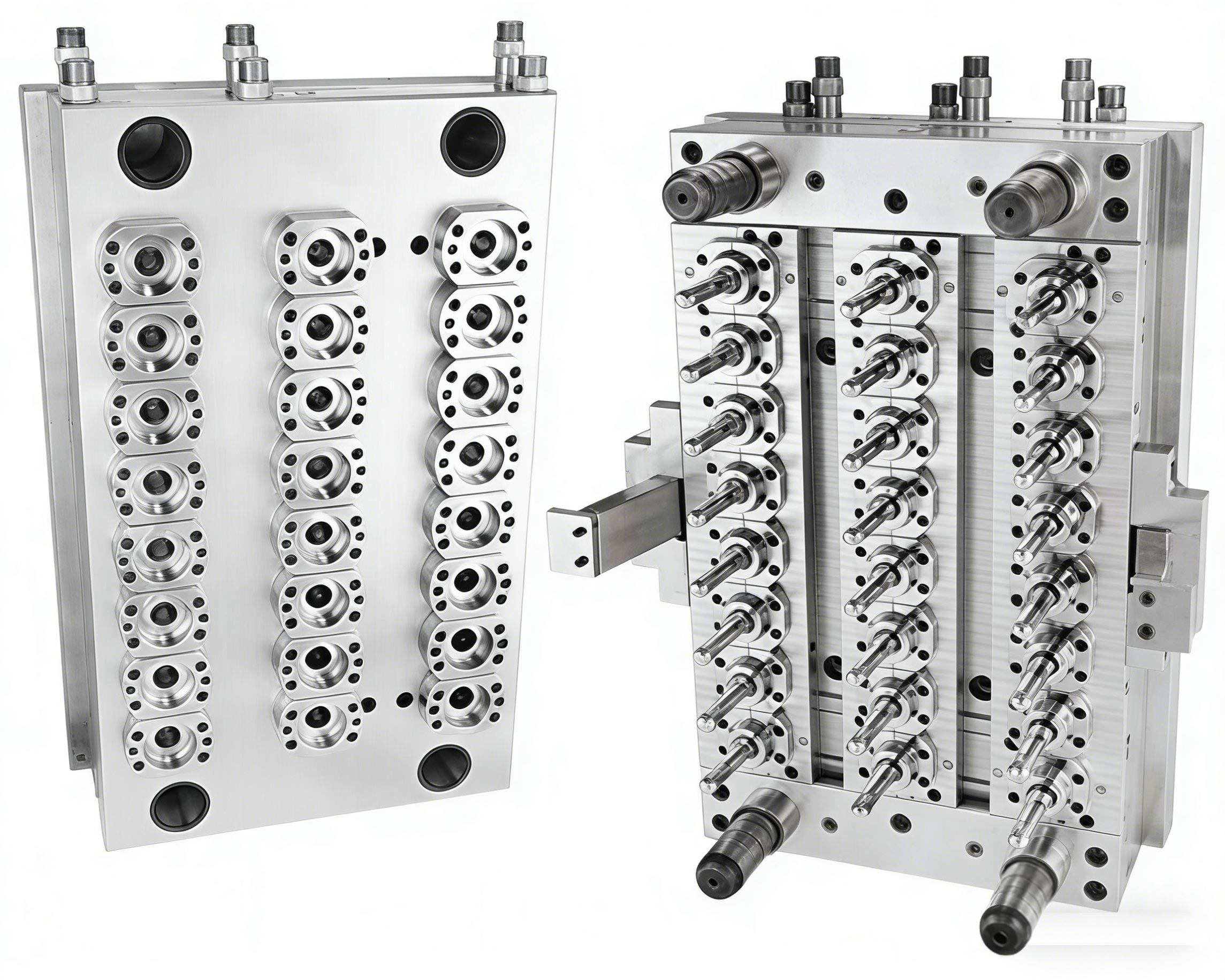
Injection molding begins with fabricating a tool, also known as a mold, precision-machining it out of either steel or aluminum.A machine operator places the tool into the injection molding machine.The injection molding machine is fed thermoplastic resin pellets via a hopper.When the injection molding machine is activated, these thermoplastic pellets are pushed forward into the barrel of the machine by a screw and melted down until they liquefy.This liquid resin, known as a shot, is collected at the front end of the barrel in a chamber.Then, the machine injects the thermoplastic resin shot from the chamber into the tool cavity.The machine applies pressure until resin fills the tool.After cooling, the resin resolidifies, forming the part. Finally, the part ejects from the machine and moves on to the next step of production.This process is easily repeatable for production runs ranging from hundreds to millions of parts.
3. What are the benefits of plastic injection molding?
In most production runs the molding process produces parts typically in finished condition with the manufacturing process complete unless the part needs additional finishing steps, such as painting.Plastic injection molding is a huge cost-saving measure as multi-step manufacturing processes can be extremely pricey.The production cycle is relatively short, meaning that the parts have a quick turn-around time for moving on to the next steps.Since the molding process is repeatable thousands of times, plastic injection molding is one of the most cost-effective and efficient manufacturing choices for producing large part volumes.
4. How much does plastic injection molding cost?
Out of all the costs for injection molding, tooling makes up the majority.Tooling makes or breaks the plastic injection molding process because proper tooling is key to having a successful production run.Tooling pricing depends on part complexity, production cycle length, and thermoplastic resin material.Costs also depend on the type and amount of resin needed to create each part.The size of the part correlates directly to the size of the injection molding machines, which are rated by tonnage or the amount of force needed to hold the mold closed.Molding cycle time can increase depending on the complexity of the part.These factors all play a factor in the costs associated with the plastic injection molding process.
5. What are the types of plastic resin?
Injection molding utilizes a variety of thermoplastic resins tailored to the part’s required specifications.There are four categories and two subgroups of thermoplastic resin:
Commodity resins,Engineering resins,High-performance resins,Ultra resins,Amorphous thermoplastics,Semi-crystalline thermoplastics
6. What are the design considerations for injection molding?
When designing parts for plastic injection molding there are specific criteria to follow to produce optimal results.Wall thickness needs to account for material choice and part structure.Tapered sides, known as draft, are considered as well. Draft sides make the part easier to eject from the injection molding machine by allowing air into the mold.
7. What are the techniques used in injection molding?
There are five different techniques used in plastic molding, each with its own advantage.The injection mold manufacturer will choose which technique best fits based on cost, function, or aesthetic needs.
Structural foam molding,External gas assist molding,Internal gas assist molding,Insert molding,Overmolding
8. How do you make tools and molds for plastic injection molding?
Mold making, or tooling, requires significant capital investment because of its critical role in creating parts.Tool fabrication typically requires specialty tooling steels.However, aluminum tools can lower production costs, especially in the prototype stage but require specific molding techniques.
Before fabricating molds, the parts need to be finalized completely, with the design frozen because any tooling changes are very costly.Molders and tool builders must work closely to ensure that the tool design meets the part requirements. Every mold must include callouts for parting lines, gates, and ejector marks.Parting lines are the line of separation on the part between the two mold halves.Gates are channels in the mold where the molten thermoplastic enters the mold cavity.Ejector marks are the spots where the injection molding machine’s ejector pins will push the finished part out of the mold.
9. What are the finishing processes for injection molded parts?
Once the parts leave the injection molding process, they have the option to get finished with a second manufacturing process.Finishing processes include outfitting them with threading using ultrasonic, thermal, or other specialty equipment that welds plastics together.Parts can receive logos or branding by laser engraving.Paint, silk screening, and pad printing may also be applied.Finishing with paint or other coatings prevents part surfaces from abrasion and increases longevity.
If you plan on utilizing plastic injection molding, keep in mind there are specific design feature requirements.If you are unsure how to get started or would like some expert advice on plastic injection molding, contact us and we would be happy to help.
What is a mold base? and how many parts does one mold base contain?
What is the basic structure of the mold base?
Related Article